Decanter vs. Aerator: What’s the Difference?
Learn how decanters and aerators differ, when to use each, and how to choose the right tool for your wine.
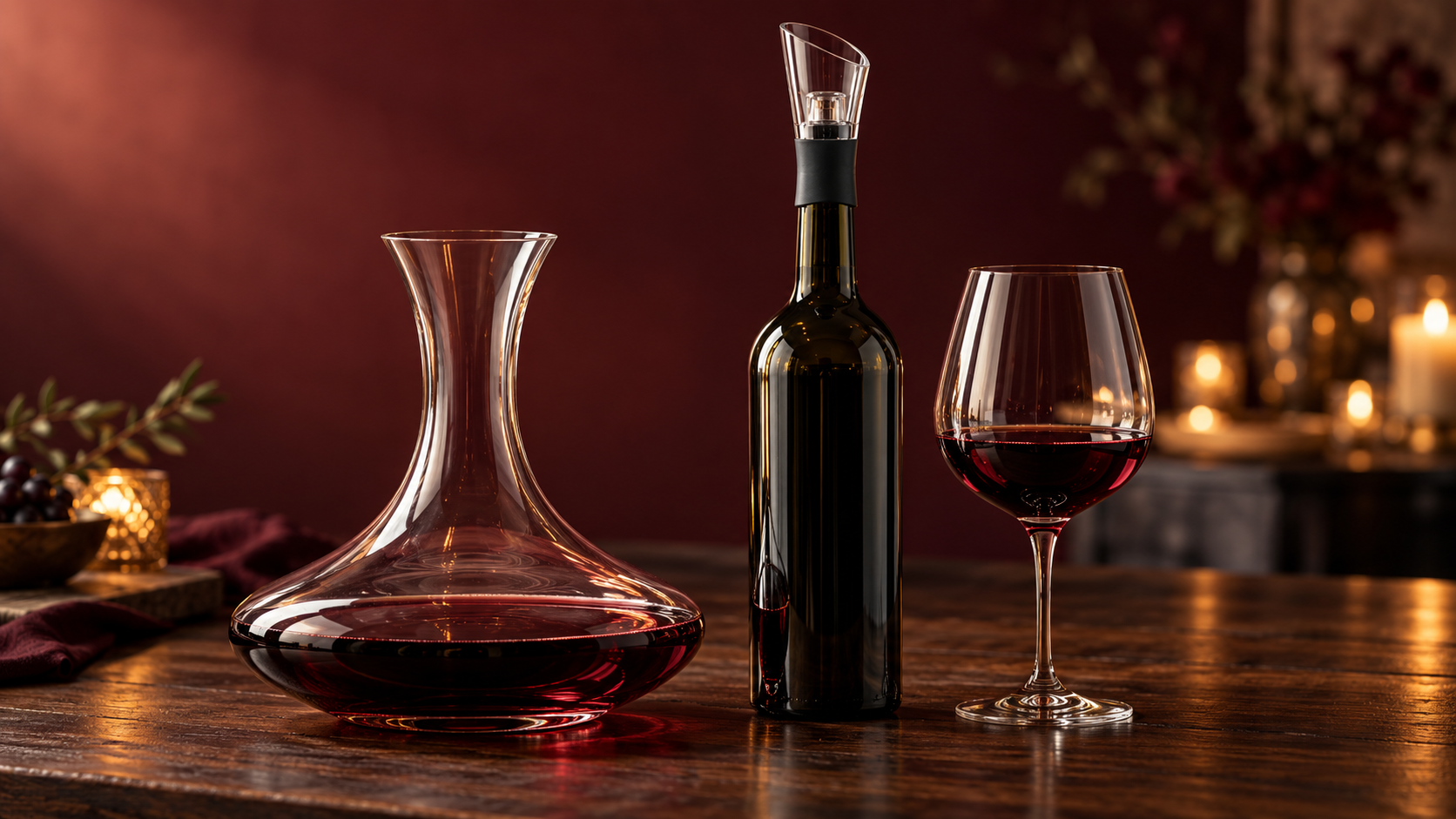
You’ve opened a bottle, poured a glass, and taken that first sip. The wine seems a little reserved, or its drying grip overwhelms everything else. Someone suggests letting it breathe. But should you reach for a decanter or an aerator?
Both tools expose wine to air, but they work differently and serve different needs. Understanding those differences can help you choose an accessory you’ll actually use, without turning dinner into a sommelier certification exam.
What Does Letting Wine Breathe Mean?
Exposure to air can change how a wine smells and tastes. Some aromas become more noticeable, while certain volatile compounds dissipate. A wine that initially seems closed or awkward may become more expressive.
The key word is “may.” Air doesn’t improve every wine, and neither tool can recreate years of bottle aging. Think of aeration as giving a wine room to reveal itself, rather than giving it a personality transplant.
What Is a Decanter?
A decanter is a separate vessel, usually glass, into which you pour wine before serving. Many designs have a broad base that creates a larger surface area for contact with air.
Decanting has two main purposes: exposing wine to air and separating it from sediment. For a young red, you might use the vessel to explore how the wine develops before dinner. For an older bottle with sediment, careful pouring allows you to leave those deposits behind.
The decanter itself doesn’t automatically filter anything. The separation happens because you pour slowly and stop when sediment approaches the bottle’s neck.
There’s also a visual benefit. A decanter makes an ordinary table feel a little more intentional. Even Tuesday’s takeout can appreciate good presentation.
What Is an Aerator?
An aerator is a small device that increases a wine’s contact with air as you pour. Some fit into the bottle’s neck; others are held above a glass. Designs vary, but the appeal is convenience: aeration happens during serving.
An aerator can be useful when you want to try opening up a young, robust red without transferring the bottle into another container. It also suits evenings when you’re pouring a single glass.
However, an aerator isn’t equivalent to giving wine an extended rest in a decanter. Results depend on the device and the wine. Most also aren’t designed to separate sediment, so an older bottle deserves a different approach.
Which Should You Use?
Choose an aerator if convenience comes first. It’s compact, easy to bring out for a casual pour, and usually demands less storage space than a decanter. Check that its parts are accessible for cleaning and that the pouring mechanism feels manageable.
Choose a decanter if you want to serve several glasses, watch a wine evolve, or carefully separate sediment. Look for a stable base, a comfortable grip, and a neck that makes pouring straightforward. A dramatic sculptural design loses its charm when cleaning becomes an archaeological expedition.
For older, delicate wines, proceed gently. They may need sediment removed but little additional air. Decant close to serving when appropriate, and avoid assuming that an older bottle needs a longer breathing period.
If you’re shopping online, prioritize clear dimensions and care instructions over grand promises; a tool that fits your routine is likelier to get regular use.
You don’t need both tools immediately. Start with the one that matches how you usually drink wine.
How Long Should Wine Breathe?
There’s no universal countdown. The wine’s age, style, condition, and your preferences all matter.
Start by tasting a small pour straight from the bottle. If you decide to decant a young red, taste again periodically rather than leaving it unattended for hours. Notice whether its aromas become clearer and whether you enjoy its balance more.
With an aerator, compare a small aerated pour with an untreated one. That simple experiment tells you more about your bottle than a sweeping claim on a product box.
What About White and Sparkling Wine?
Some white wines benefit from air, but many are enjoyable immediately. If you decant a white, keep its serving temperature in mind.
For everyday sparkling wine, skip these tools. Preserving the bubbles is usually part of the pleasure, and decanting can release them.
Let Your Glass Decide
A decanter offers time, presentation, and careful sediment separation. An aerator offers quick, convenient exposure to air during pouring. Neither is a requirement for enjoying wine.
Choose thoughtfully, taste as you go, and remember: the best accessory earns its place by making your wine experience more enjoyable.