How to Choose a Wine Gift They’ll Actually Use
Thoughtful accessories, small comforts and a little curiosity—without guessing someone’s favorite bottle.
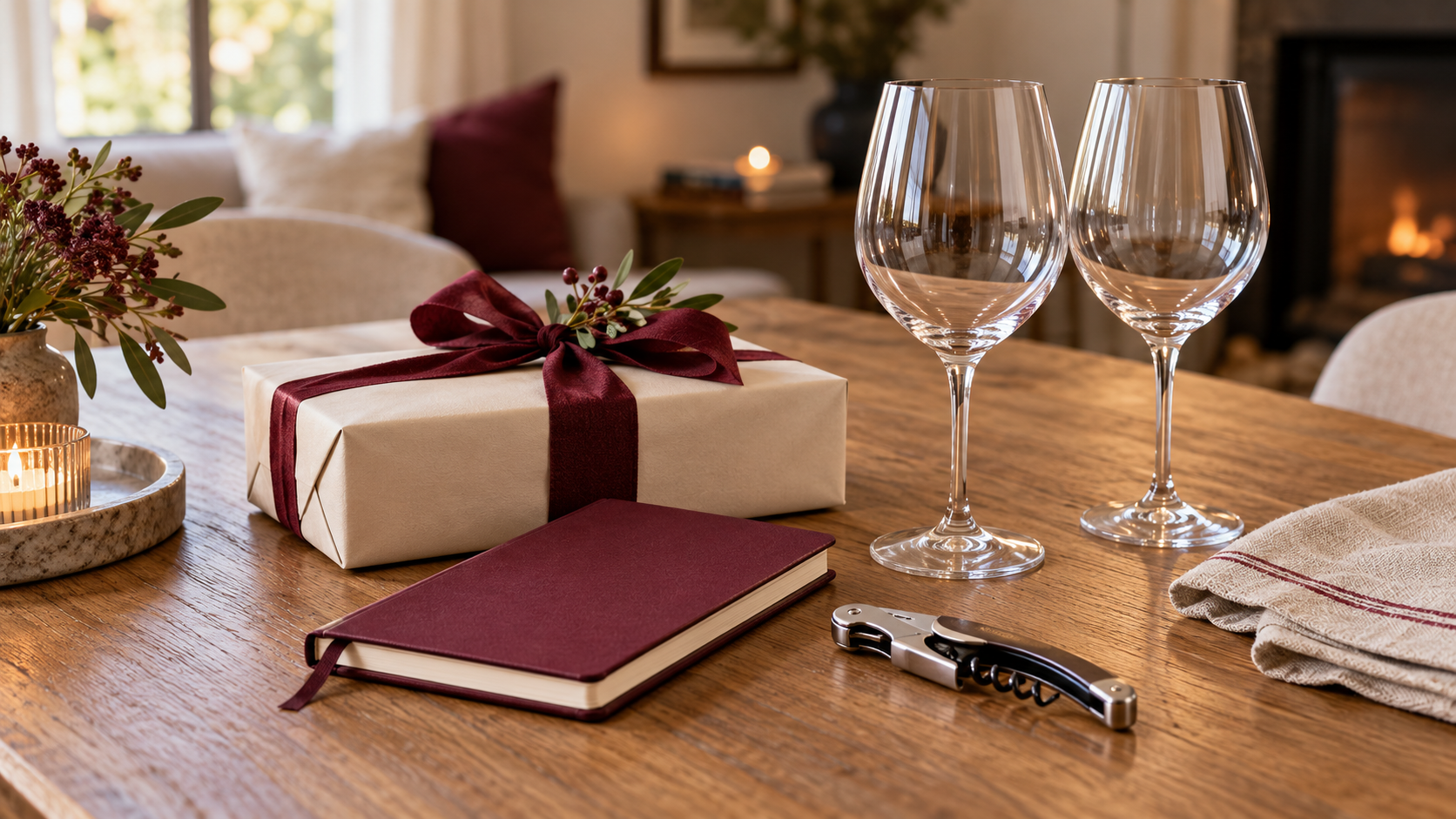
Buying for a wine lover can feel surprisingly difficult. Do they already own that gadget? Is the impressive-looking glass too tall for their cupboard? And what if their favorite bottle is not the one you remember? Start somewhere simpler: picture an ordinary evening in their home.
The most useful gift fits a real habit. It might make opening a bottle easier, help a curious friend remember a discovery or give a frequent host one less thing to borrow. You do not need to assemble a miniature wine shop. One well-chosen thing is plenty.
Choose the person before the product
Think about what they actually enjoy. The friend who hosts six people every month has different needs from someone who likes a quiet glass while cooking. A devoted collector may already have strong equipment preferences; a beginner may appreciate something straightforward, with no special vocabulary required.
A useful question is, “What part of opening or serving wine would you make easier?” The answer can reveal more than a favorite grape. Someone may want an opener they find comfortable to hold, an extra pair of glasses or nothing that takes up counter space. If the gift must be a surprise, notice what they reach for when you visit. An upgrade to a well-used basic is often a better fit than an unfamiliar gadget.
If you are buying a bottle, WSET recommends considering the recipient’s interests and adding a card explaining your choice. Its gift guidance also suggests accessories or educational books when choosing wine itself feels overwhelming. [1] Treat that as permission to give something useful rather than gamble on a grand label.
Match the tool to the bottle
A stopper sounds universal, but compatibility matters. Vacu Vin’s Original Wine Saver uses a pump with its matching stoppers; the manufacturer directs sparkling-wine users to a separate Champagne Saver & Server. [2] Check whether the gift is intended for still wine or sparkling wine, and whether the package includes everything needed to use it.
Apply that same check to other accessories. Does a rechargeable opener include its charging cable? Is a cooler sleeve prepared in the freezer, and is there room for it? Read the actual instructions and included-items list. A pretty box should not hide an extra shopping trip.
Give glassware with real life in mind
Before choosing glasses, consider cupboard height, table space and how many people usually gather. Two glasses may suit a couple beautifully; a host might prefer to extend a set they already own. If you cannot identify that set, ask discreetly rather than guessing at a near-match.
Care requirements deserve a look, too. Riedel says most of its glasses are dishwasher safe, but identifies exceptions through packaging and care instructions. [3] Check the specific model, not just the brand. Someone who avoids handwashing may appreciate practical everyday glassware more than a delicate showpiece.
Make curiosity part of the present
A notebook can be a lovely option for someone who talks excitedly about new discoveries. Add a note on the first page suggesting a few easy prompts: the bottle, the meal, who was there and whether they would buy it again. Leave room for memories, not just tasting terminology.
For a reader, choose a book that matches their level and interests. A compact regional guide might suit a traveler; an approachable introduction could suit someone just starting out. Check the publication date and contents before ordering. More technical does not automatically mean more thoughtful.
Keep the bundle small and coherent
If you want to combine items, give them one clear purpose. A notebook and a pen make sense together. Glasses and a suitable care cloth can, too. Avoid padding the package with novelty tools simply to make it look generous. The recipient should understand the gift without needing a demonstration.
Set your budget before browsing, then compare the complete package: dimensions, materials, care, included parts and return options. Personalization can be charming, but check its spelling and return terms carefully. Skip it if you are unsure of the recipient’s taste.
Finally, write one sentence about why you chose the gift. “For keeping track of the bottles we discover together” turns an ordinary notebook into an invitation. That little connection is what makes a useful object feel like a present.
Further reading
This original Wine Cognito guide combines our gift-selection suggestions with WSET guidance and manufacturers’ compatibility and care information. Always check the instructions for the specific product you choose.